
Replacing a worn or damaged door
Rotting bottom rails, dented sections, cracked hinges, or a door that no longer seals evenly often point to replacement instead of repeated patchwork.
Serving Garden Grove, California & surrounding areas
Calls answered around the clock
Installation & Cable Service · Anaheim Area
Describe your door size, style, and what's not working once, and we'll connect you with a local contractor who installs and repairs garage doors in the Garden Grove, Anaheim area.
Describe the door once
Connect with a local contractor
Talk directly about the work
You decide how to proceed
Installation scope
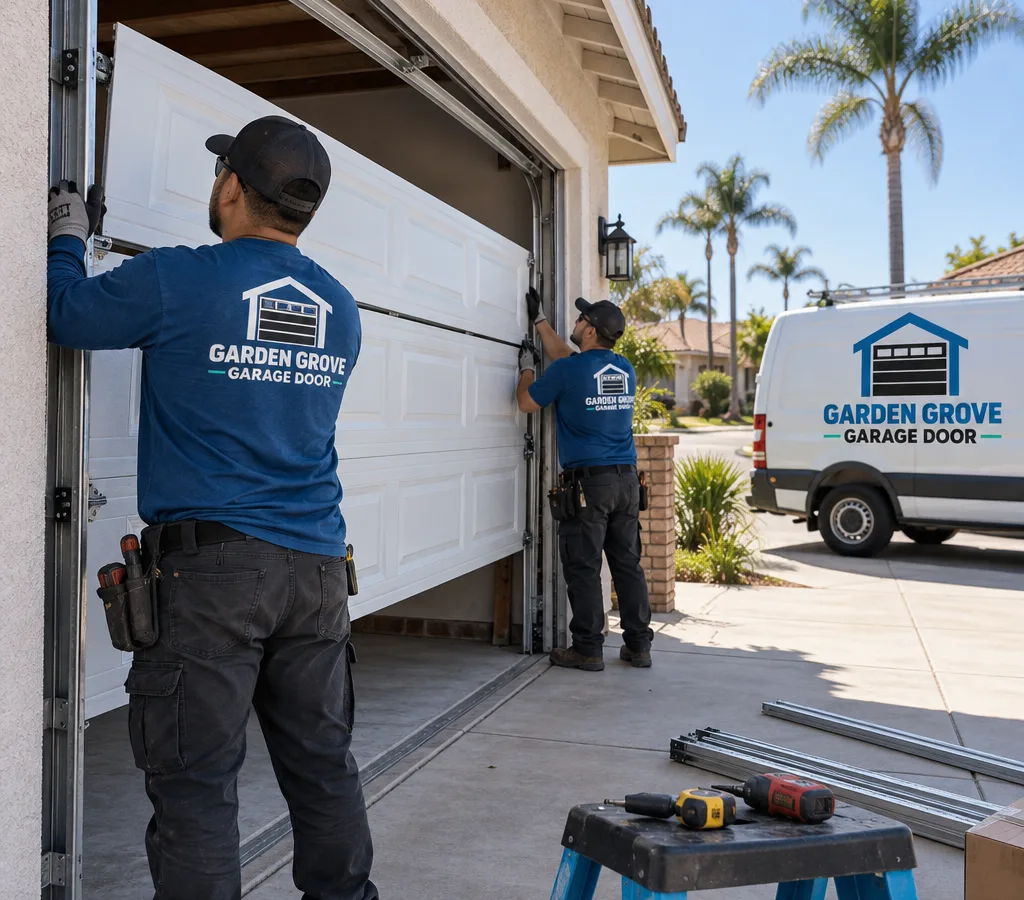
A proper garage door installation is more than swapping panels. The contractor measures the opening, confirms headroom and side room for tracks, and checks the framing so the door can seal evenly and run without binding.
For garage door installation in Anaheim-area homes, the contractor typically:
If you're comparing replacement options, it helps to know that the door itself—steel, insulated steel, composite, or wood—is only part of the system. Tracks, rollers, hinges, cables, drums, and springs all work together. When you call Garden Grove Garage Door, you can describe what you have now and what you want to change, and we'll connect you with a local contractor who can walk the details and compatibility checks with you.
If what you need right now is fixing a door that won't move, a garage door repair service can also be the right starting point, especially when the cause is a cable, spring, track, or opener issue rather than a full door replacement.
CALL NOW: (657) 296-3776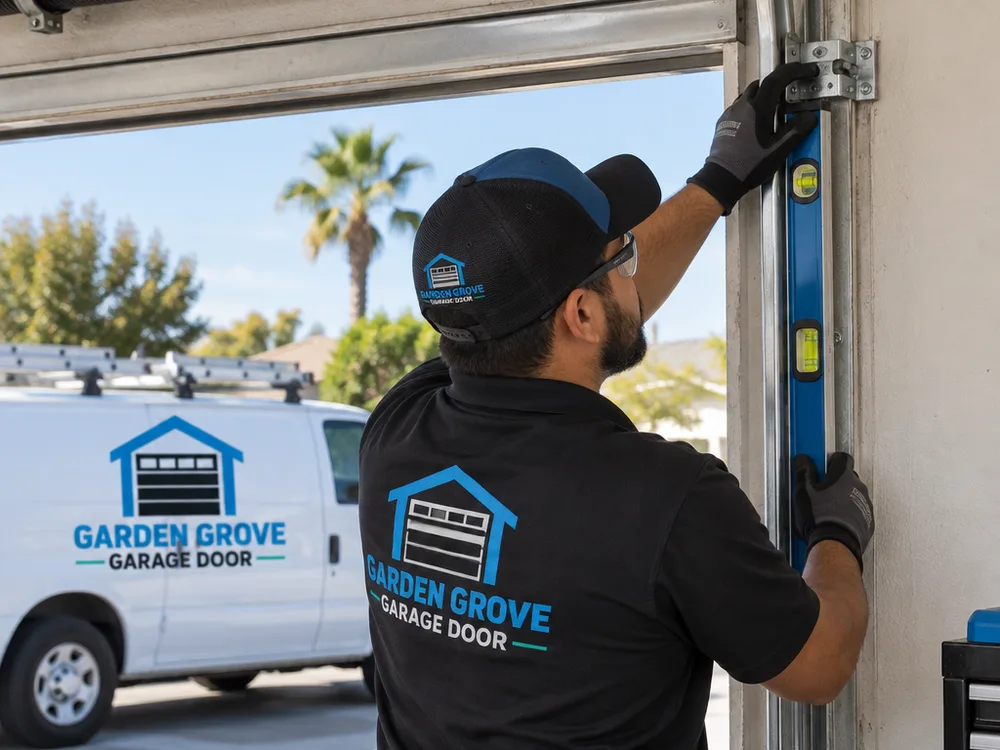
Installation & cable details
Rotting bottom rails, dented sections, cracked hinges, or a door that no longer seals evenly often point to replacement instead of repeated patchwork.
New rollers, correctly aligned tracks, and proper spring balance can reduce rattling and chatter that builds up over years of use.
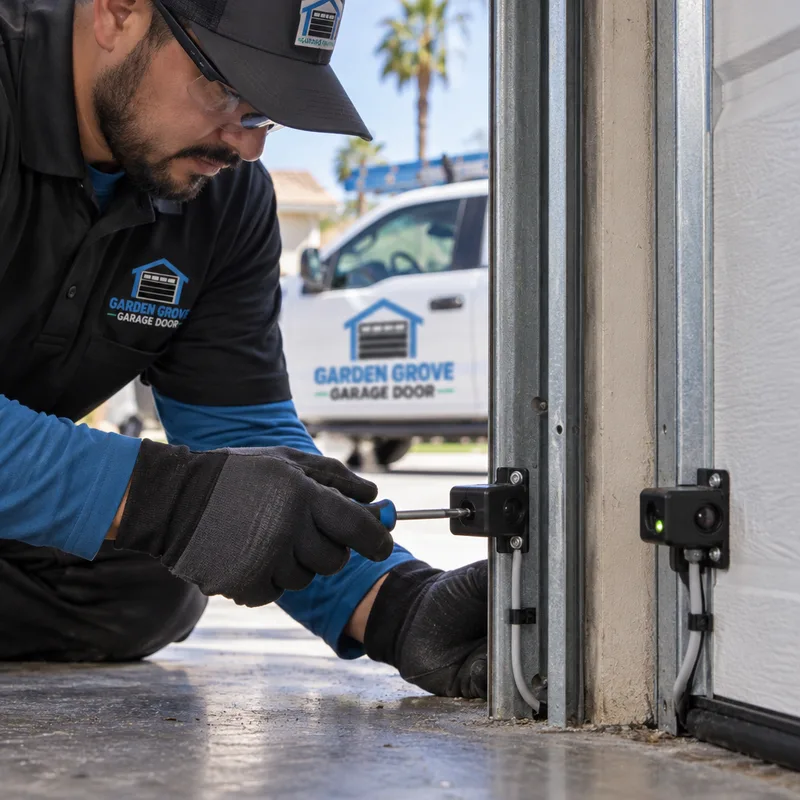
A new door changes weight and travel. The contractor checks whether the existing opener, rail, and safety sensors can be set up correctly.
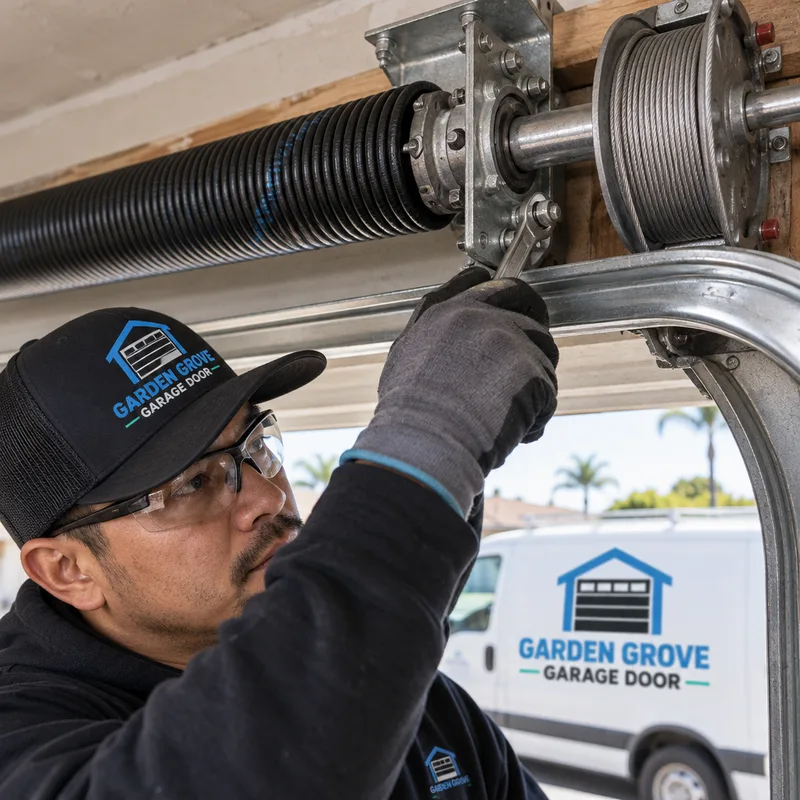
Frayed, slack, or off-drum cables are a common reason doors go crooked in the opening. Cable issues are tied to spring tension and drum setup.
A door that sticks in one spot, rubs the jamb, or chews up rollers can be a sign the track is bent or the door is racking under load.
Share door size (single or double), door type (sectional or one-piece), and what's happening: replacement request, new install, or a door that's off track or uneven.
You'll be matched with an independent contractor who handles garage door installation and cable repair in the Garden Grove and Anaheim area.
The contractor asks follow-up questions, confirms what needs to be done, and explains options like insulated doors, hardware changes, or opener adjustments.
If the plan and terms work for you, you schedule directly with the contractor. If not, you're not obligated to move forward.
If your garage door is due for replacement or the door is sitting crooked, describe what you're seeing once and get connected with a local contractor who handles installation and cable work.
Door and hardware detail
Installation and cable questions
If the door sections are structurally damaged—warped, cracked, heavily rusted, or failing at hinge points—replacement is usually the cleanest path; if the door is sound but won't move smoothly, repairs to cables, springs, rollers, tracks, or the opener may be enough. When you call, mention whether the door is intact but misbehaving, or if the door itself is bent, rotted, or separating at the seams so the contractor can steer the conversation correctly.
Garage door cable repair typically means correcting slack or frayed lift cables, re-seating cables on the drums, and resetting spring tension so the door lifts evenly on both sides. Cables are part of a spring-loaded system, so the contractor usually looks at the drums, bottom brackets, bearings, and the torsion shaft at the same time, not just the cable strand.
A door that rises unevenly is often related to a cable coming off a drum, a cable stretching or fraying, or a track or roller bind that makes one side lag. Stop running the opener and describe what you see—which side is low, whether you hear clicking, and whether the cables look slack—so the contractor can decide the safest next step.
Sometimes, yes, but the opener has to be compatible with the door weight and travel, and it must be adjusted correctly after installation. The contractor typically checks the opener's condition, the rail and arm connection to the top section, the force settings, and sensor alignment before advising whether to keep or replace it.
Have the approximate door width and height, whether it's a single or double door, and a photo of the inside—tracks, springs, and opener—if you can safely take one. It also helps to note if your ceiling has low headroom or if there are obstructions like storage shelving near the tracks, since hardware choices depend on available clearance.
Clearing space near the opening helps because installation involves removing old sections, setting tracks, and testing the door through full travel. If you can, move vehicles out of the driveway area and keep the path to the garage clear so the contractor can stage panels and hardware safely.
Local contractor referral
Call Garden Grove Garage Door and describe the door size, what you want to install, or what's going wrong. We'll connect you with a local contractor who can take it from there and talk through the next steps directly with you.